
Word Bubble Puzzle - Word Game
People Lovin GamesWord
4.8621.00 Reviews
- Version
- 3.7
- Installs
- 1.00M
- Age Rating
- Everyone
Screenshots
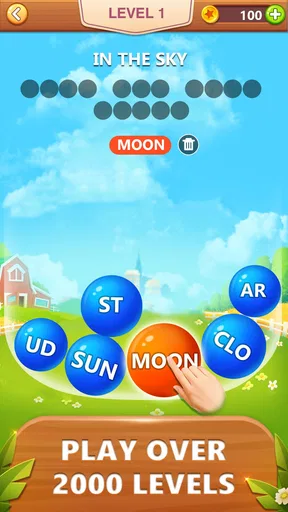
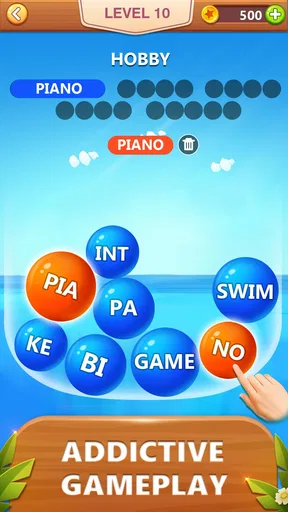
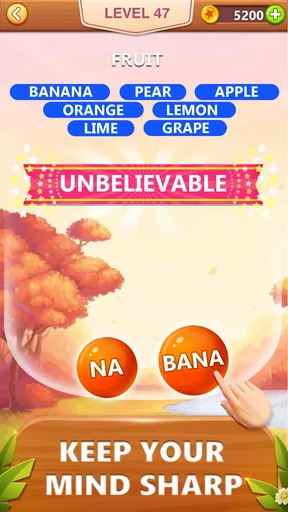
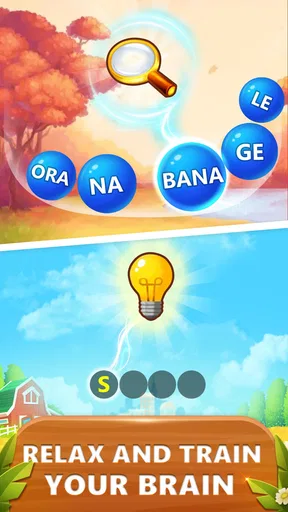
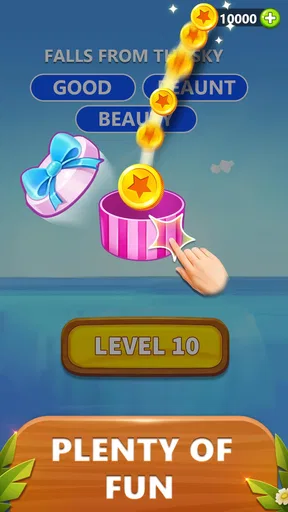
Our Review of Word Bubble Puzzle - Word Game
 Analysis by Appyee
I picked up Word Bubble Puzzle expecting a simple way to fill a few spare minutes, and that is exactly where it works best. It is a free word game from People Lovin Games in which I connect letters to uncover words, with each puzzle offering a small, self-contained challenge rather than a long session that demands my full attention. The idea is easy to understand, but finding the less obvious words gives it enough bite to keep me looking for “one more” answer.
What makes it useful in a household is how naturally it fits shared-device moments. Someone can play while waiting for dinner, hand the phone to another person when stuck, and continue without needing a complicated explanation. I would not describe it as a deep competitive game or a replacement for a large word-game collection. I see it more as a friendly, low-pressure puzzle that works well when different people want to take turns.
How it feels when several people use the same device
The basic interaction is immediately approachable: letters are placed on the screen, and I connect them to form words hidden in the puzzle. That makes the game accessible to a child who is learning to recognize words, an adult who enjoys casual brain teasers, or an older player who prefers a calm activity over fast reactions. The absence of complicated controls is especially helpful when the phone is being passed around.
In my household-style test, the best rhythm was to let one person search for obvious words first, then invite another player to look for shorter or less familiar combinations. This creates a natural division of attention. One person may notice a word by scanning vertically or diagonally, while another sees a possible connection from a different angle. The game becomes a small cooperative conversation instead of a silent solo activity.
That shared use also exposes one of the game’s practical strengths: the rules are simple enough that nobody needs a tutorial session before joining. I could explain the goal in a sentence, and a new player could start experimenting. For a shared phone or tablet, that matters more than a long feature list. A game that requires personal settings, a separate profile, or a detailed introduction is less convenient when people are taking turns casually.
There is a trade-off, though. Because the experience is built around solving the current puzzle, it is not naturally designed as a family scoreboard or a structured multiplayer activity. I would not choose it if the main goal were to compare performance across several players or maintain separate progress for everyone. Its strength is the puzzle itself, not household competition.
A realistic evening use case
Imagine a quiet evening when one person is waiting for a television program to start and another is sitting nearby with the shared phone. The first player finds several easy words, then passes the device over after getting stuck. The second player spots a word that was missed, and the phone goes back again. This kind of handoff feels comfortable because the game does not require quick reflexes or constant concentration.
I also found that the puzzle format suits short breaks better than long, uninterrupted sessions. If I have only a few minutes, I can attempt a puzzle without feeling that I am abandoning a large adventure. If I have more time, I can continue looking for solutions. That flexibility is more valuable than it sounds, especially on a device used by multiple people with different schedules.
For parents or relatives sharing a device with younger players, I would suggest treating the game as a word-finding activity rather than simply handing over the phone. Asking the child to explain why a group of letters forms a word turns the session into a small language exercise. It also gives the adult a chance to notice whether the challenge is enjoyable or frustrating without assuming that every player wants help.
What to decide before installing it on a shared device
The game is free to download, which removes the biggest barrier to trying it. It is listed for Everyone, so its general presentation is suitable for a broad age range. Still, an age label should not replace ordinary household judgment. A young player may understand the word puzzles perfectly well but still need guidance about using a shared device, changing settings, or interacting with any purchase prompts that may appear in a free game.
There are in-app purchases ranging from $0.99 to $99.99 per item. That is the detail I would discuss before allowing unsupervised play on a phone connected to a payment method. The game itself can be tried without paying, but “free” does not mean that every optional transaction is irrelevant. In a family setting, I would make the device owner’s expectations clear and keep purchase approval with the adult responsible for the account.
This is also where shared-device boundaries matter. The game is not a substitute for separate accounts or separate progress arrangements when several people expect independent ownership of their play. If one person’s session affects what another person sees, the household should agree on a simple routine: take turns, avoid changing anything that belongs to someone else, and stop before making a purchase or other decision that the device owner has not approved.
I would not invent a family-management system around it. Instead, I would rely on the phone’s existing account and purchase settings, plus direct supervision where appropriate. That approach is less exciting than a built-in family dashboard, but it is honest and practical. The important boundary is not whether the game looks harmless; it is who controls the device and who is authorized to spend money through it.
Coordinating turns without turning a puzzle into an argument
Word puzzles can create surprisingly strong opinions when two people see different possible answers. On a shared device, I found that the smoothest approach is to let each player have a short search period, then switch. If someone thinks a word is present, the other person can test the idea rather than simply dismissing it. That keeps the interaction cooperative and gives both players a reason to stay engaged.
A useful habit is to separate “finding” from “finishing.” One player can point out a promising group of letters, while the person holding the device completes the connection. This avoids grabbing the phone away and makes the game easier for a younger or less confident player. It also turns the puzzle into a conversation about spelling and patterns instead of a race to control the screen.
Another practical tip is to agree on what counts as help. Some players enjoy hints from another person, while others want to solve everything alone. I would ask before revealing a possible word, especially if the player is using the game for personal practice. In a household with mixed ages, this small agreement prevents the most knowledgeable player from accidentally removing all the challenge.
The game’s simplicity helps coordination, but it also means that the household has to provide the structure. I would not install it expecting the app to organize family turns, divide progress, or settle disputes. It is better understood as a shared puzzle board that people coordinate around themselves.
Age, trust, and the difference between suitable and supervised
The Everyone rating makes sense for the word-puzzle concept. I did not need to prepare a child for violent themes, complex strategy systems, or an intimidating control scheme. The main question for younger players is whether they can read enough of the words to enjoy the challenge. For some children, the game may be a pleasant way to practice vocabulary; for others, difficult words could make it feel like homework.
That distinction is important. I would introduce it as something to explore together rather than promise that it will improve reading skills. The game gives opportunities to notice spelling and word patterns, but the value depends on how the player engages with it. A child who becomes frustrated by unfamiliar words may need encouragement or a turn with an adult, while a confident reader may enjoy searching independently.
Trust also includes the device itself. If the phone belongs to a parent, partner, or grandparent, the player should know which parts of the device are off-limits. The game’s casual appearance can make it tempting to assume that no supervision is needed, but purchases and account access are separate concerns from content rating. I would be comfortable letting a trusted older child play, but I would still establish clear rules for spending and device changes.
For adults sharing with older relatives, the straightforward controls are a benefit. There is no need to master rapid tapping or remember a complicated sequence of gestures. Someone who prefers relaxed games can focus on recognizing words. The only caution is visual comfort: a word puzzle can become tiring if the player is straining to inspect letters, so a larger screen may be preferable when available.
Where it stands beside other word games
Compared with a traditional crossword, this game feels more immediate. I do not need to read long clues or maintain a broad set of general-knowledge answers before beginning. The letters on the screen provide the starting point, so the challenge is more about spotting combinations and testing possibilities. That makes it easier to share with someone who enjoys words but does not usually complete newspapers or dedicated crossword books.
Compared with a daily word-guessing game, it offers a different kind of satisfaction. Daily guessing games often center on one featured answer and a limited attempt structure. Here, I can approach the puzzle more freely by searching the available letters and building words as I notice them. If I want a routine tied to a single daily result, another style may suit me better. If I want several casual discoveries in one sitting, this format is more comfortable.
It also differs from word-board games that focus on scoring, tiles, or head-to-head play. Those alternatives are better when I want a clear winner, strategic placement, or a long-running match with another person. Word Bubble Puzzle is less demanding and more cooperative by nature. I would choose it for a relaxed shared session, not for serious competition.
One non-obvious advantage is that the game can support different levels of participation at once. A strong player can search for difficult words, while a beginner can look for familiar ones. In a competitive word game, that skill gap may make one person feel left behind. Here, the shared puzzle gives everyone a way to contribute, although the more experienced player still needs to avoid solving everything immediately.
Performance, access, and the practical download decision
The game supports Android devices running version 7.0 or newer, so compatibility is worth checking before installing it on an older phone or tablet. That requirement is not especially demanding for many devices, but a household may have an aging spare phone that falls outside the supported system range. If the shared device is old, I would verify its Android version first rather than assume a simple puzzle will run everywhere.
The current version is 3.7, which gives me confidence that this is an established app rather than an abandoned experiment. I still judge it by what it does in everyday use: the word-connecting idea is clear, the sessions are easy to start, and the game does not require a large time commitment. Those qualities matter more to me than having a long list of systems that would complicate shared use.
Its popularity is also substantial, with over a million installs and an average rating of 4.8 from around forty-one thousand ratings. I treat those figures as signs that the basic concept has connected with many players, not as proof that every household will enjoy it. Word preferences vary, and a game that feels pleasantly simple to one person may feel repetitive to someone seeking elaborate progression.
The developer, People Lovin Games, has positioned this as a casual word title rather than a premium boxed game. That helps explain the free entry point and the presence of optional purchases. I would install it when I want to try the central word-search experience without committing money upfront, while keeping the purchase boundary in mind on a shared device.
Who should choose it, and who should skip it
I would recommend it to someone who likes letter puzzles, wants short sessions, and enjoys finding words without learning a complicated ruleset. It is a particularly good fit for a household where a phone or tablet is passed between people, because a new player can understand the objective quickly. It also suits adults who want a quiet mental break rather than an action game.
I would be more cautious about recommending it to someone who needs robust personal profiles, detailed competitive statistics, or a carefully structured family mode. The game’s appeal comes from its directness, and that same directness means it may not satisfy players who want extensive customization or a formal multiplayer experience.
It may also be the wrong choice for a person who dislikes word-search mechanics. If you prefer clue-based crosswords, vocabulary quizzes, or strategic tile placement, connecting letters on a puzzle board may feel too open-ended. Likewise, players looking for a single daily challenge with a shared result may prefer a more focused alternative.
My biggest practical caution is not the puzzle design but the free-to-play context. I would not let a child use a payment-enabled shared device without a clear rule about purchases. That is a household decision rather than a criticism of the word mechanic, but it affects whether the app is genuinely convenient for a family.
My household verdict
After using it as a casual word game, I see Word Bubble Puzzle as a good shared-device choice when the goal is simple cooperation. It gives people something to discuss, allows players with different skill levels to contribute, and works in short pauses without demanding a full evening. The best experience comes when the household treats it as a turn-taking puzzle rather than a competitive system.
I like that I can hand it to someone who has never seen it and explain the objective quickly. I also like that the free starting point makes experimentation easy. At the same time, I would keep purchase permissions clear, check the Android requirement on older devices, and avoid expecting account separation or family coordination tools that are not central to the game.
My final recommendation is straightforward: try it if you want an approachable letter-finding game that can move naturally between family members or friends. Give it a pass if you need deep progression, serious head-to-head play, or independent household profiles. For the right audience, the strongest feature is its low-friction shared play: anyone can look at the letters, suggest an idea, and become part of solving the puzzle.
That makes it a modest but useful addition to a shared phone or tablet. It is not trying to be every kind of word game, and I think it benefits from that focus. As long as everyone understands the purchase boundaries and accepts the relaxed format, I would feel comfortable recommending it for quiet breaks, family turn-taking, and everyday moments when a few hidden words are enough entertainment.
Verdict
Strengths of Word Bubble Puzzle - Word Game
- Simple rules make it easy to start playing immediately.
- Short levels are convenient for quick gaming sessions.
- Gradually increasing difficulty keeps the challenge engaging.
- Helpful hints can assist when you get stuck.
- Suitable for players who enjoy casual word-based puzzles.
Limitations of Word Bubble Puzzle - Word Game
- Some levels may feel repetitive after extended play.
- Hints or extra moves may be limited without rewards or purchases.
- Ads can interrupt the game between levels.
- The word list may be less challenging for advanced players.
- Progress could feel slow when later puzzles become difficult.
Other Releases by People Lovin Games
View All

Similar Picks in This Category
View All
Word Search - Word Puzzle Game
Bluetile4.8

Word Search Quest - Puzzles
Blackout Lab4.8

CodyCross: Crossword Puzzles
Fanatee, Inc.4.7

Words of Wonders: Crossword
Fugo Games4.9

Wordscapes: Word puzzle game
PeopleFun4.7

Word Search Explorer
PlaySimple Games4.9
Frequently Asked Questions
What is Word Bubble Puzzle - Word Game?
Word Bubble Puzzle - Word Game is a casual word puzzle designed around finding and connecting letters to form hidden words. As you progress, the puzzles generally become more challenging, requiring a broader vocabulary and more careful observation. It is suitable for short play sessions, relaxing entertainment, and players who enjoy combining word searches with simple bubble-style gameplay.
How do you play Word Bubble Puzzle - Word Game?
The main objective is to identify valid words from the letters or bubbles displayed on each level. Depending on the puzzle layout, you typically tap or swipe across adjacent letters in the correct order to complete a word. Solving the required words clears the stage, while hints or other assistance may be available if you become stuck on a difficult puzzle.
Is Word Bubble Puzzle - Word Game free to download and play?
The game can generally be downloaded and played without an upfront purchase, making it easy to try on a compatible Android or iOS device. However, free versions of puzzle games may include advertising, optional in-app purchases, or paid items such as hints and boosters. Check the store listing and purchase settings before downloading, especially if children may use the device.
Can Word Bubble Puzzle - Word Game be played offline?
Many of the basic word puzzles may remain accessible without a continuous internet connection, which is convenient for travel or areas with limited service. Nevertheless, an internet connection may be required for advertisements, rewards, synchronization, updates, or certain optional features. It is best to launch the game online first and test offline access before relying on it during a trip.
Is Word Bubble Puzzle - Word Game suitable for children and language learners?
The game can be a useful light vocabulary activity because it encourages players to recognize spelling patterns, recall words, and think carefully about letter combinations. Its suitability depends on the child’s reading level, the difficulty of the puzzles, and the amount of advertising or optional purchases shown. Parents should review the store rating, privacy information, and device purchase controls before installation.
Play our best games!


